Revisiting 52-Year-Old Grazing Exclosures at Kidman Springs, NT
December 18, 2025Kate Holzapfel, Robyn Cowley and Jaidyn Eastaughffe, NT Department of Agriculture and Fisheries, Katherine and Gary Bastin, Alice Springs. Email:robyn.cowley@nt.gov.au
In the beginning
In July 1973, three grazing exclosures (excluding cattle and horses, but not wallabies) were established at Victoria River Research Station (aka Kidman Springs), approximately 220km southwest of Katherine. The exclosures cover red calcareous soils (one deemed in ‘poor’ condition at the time and the other ‘good’, Foran et al. 1985) and black cracking clays (good condition). Six 35 x 40m (1400m2) plots inside each exclosure and six outside facilitated long-term monitoring of grazed and ungrazed changes in vegetation.
From 1973-79, annual measurements were taken. Casual observations and opportunistic photography continued through the 80’s, with sporadic data collected in 1989, 1994, 1999, 2000 and 2002. Other than a fire burning a section inside and outside of one exclosure in 2001, the exclosed sites remain unburnt. Woody density was measured in 1973, 1976, 1978, 1989, 1994, 2002 and 2025.
The exclosures were revisited in June 2025, the first since 2002. Changes observed inside and outside the exclosures over the last 50 years provide insights into how vegetation is changing in the region and the potential drivers including grazing and climate variability. These patterns can be further interpreted through comparison with the long-term fire experiment at Kidman Springs (Cowley et al. 2025). Gary Bastin, who has been monitoring the sites for 47 years, kindly volunteered his time out of retirement to show the ropes to the NT DAF team, Robyn Cowley, Jaidyn Eastaughffe and Kate Holzapfel. Woody density was remeasured as before, i.e. counts of juvenile and mature trees and shrubs (by species) within each 0.14 ha plot. Pasture standing biomass and composition of the main species were estimated with the BOTANAL method, as used at the adjacent long-term fire experiment and across other Kidman Springs monitoring sites. This will enable comparison and interpretation across the datasets. Due to a doubling of the time required to measure each plot (explained later), only the red soil (good condition) and black soil sites were revisited, with 17 of the original 36 total plots remeasured.
Woody increase
Over the past 52 years, the sites have undergone substantial changes with the most recent visit measuring a dramatic increase in woody density. Rubberbush (Calotropis procera) was abundant in 1978, recorded at more than 300 plants per hectare, but had all but disappeared by 1989. Gary recalls nearly ‘spitting the dummy’ during his first visit in 1978, counting the large numbers of rubberbush (Fig. 1b). By 2025 only two rubberbush individuals were found across the eight red soil plots remeasured. Today, the sites are dominated by dense native trees and shrubs and waist-high grass (Fig. 2). This raises the question, why has such a shift occurred?
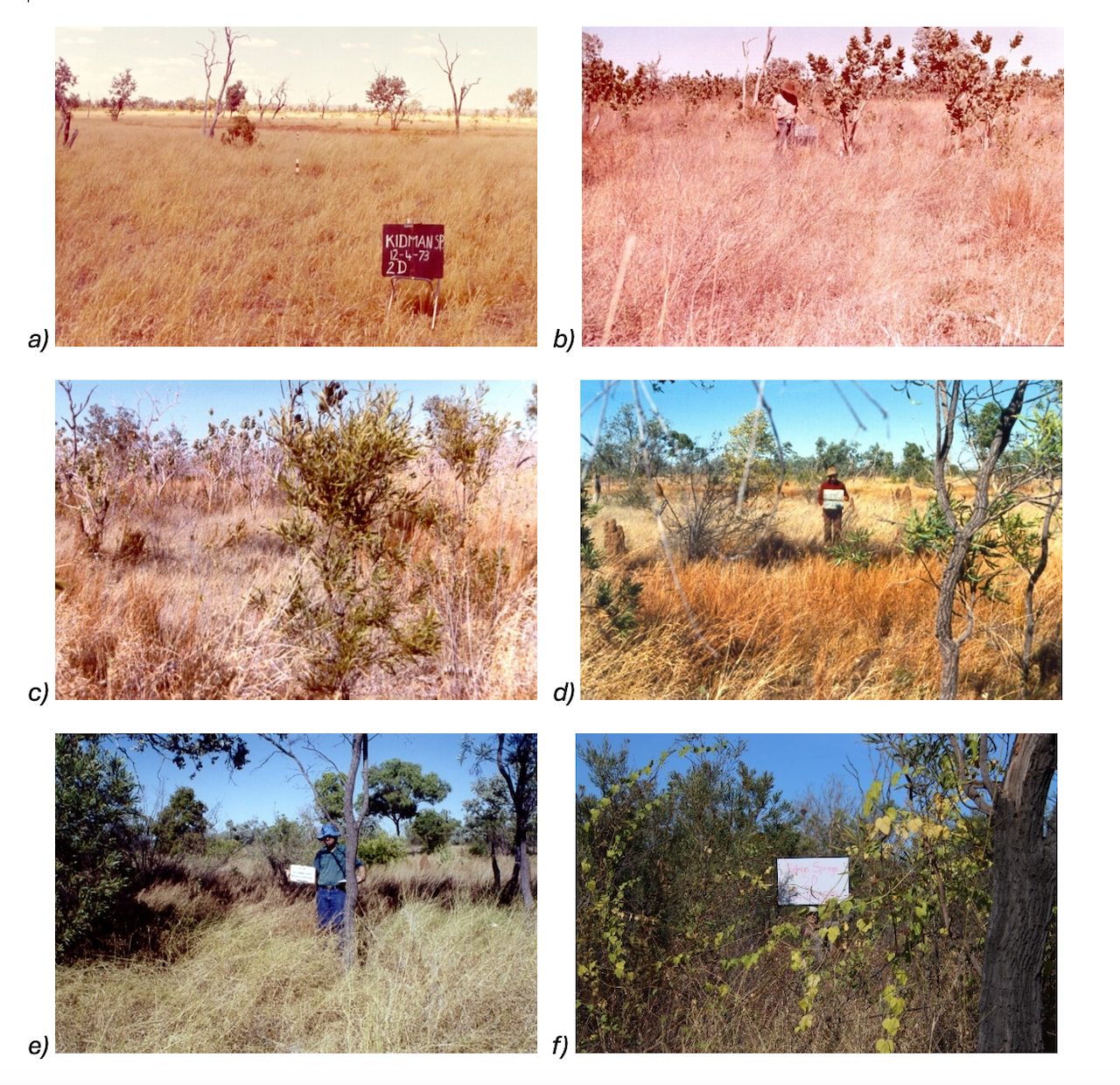
Figure 1: An exclosed red soil plot, originally deemed in good condition. Photos are from the years a) 1973 – the start of the experiment; b) 1978; c) 1983; d) 1989; e) 2000; and f) 2025. Rubberbush covered the horizon in the late 70’s but had disappeared within the exclosure by 1989.
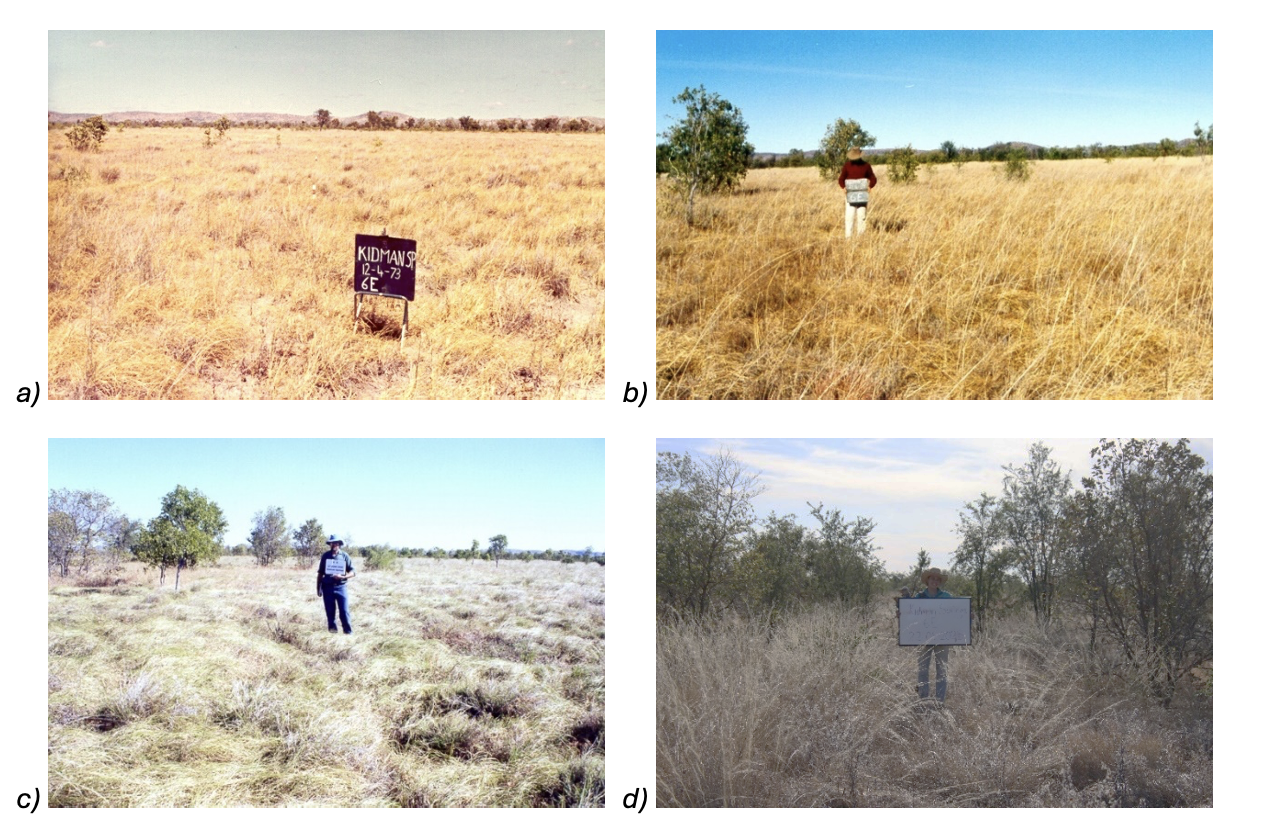
Figure 2: A grazed black soil plot in the years a) 1973 – the start of experiment; b) 1989; c) 2000; and d) 2025. Note the woody encroachment into the site, concealing the hills in the distance over time.
Over the first 30 years to 2002 woody plant density increased from close to zero to around 300 plants per hectare on the black soil and 200-800 plants per hectare on the red soil. In the 23 years since, woody plant density has more than doubled on the black soil ‘grassland’ and more than quadrupled on the red soil (Fig. 3). This increase plus the time required in searching for juveniles in dense grass effectively doubled the time required to measure each plot.
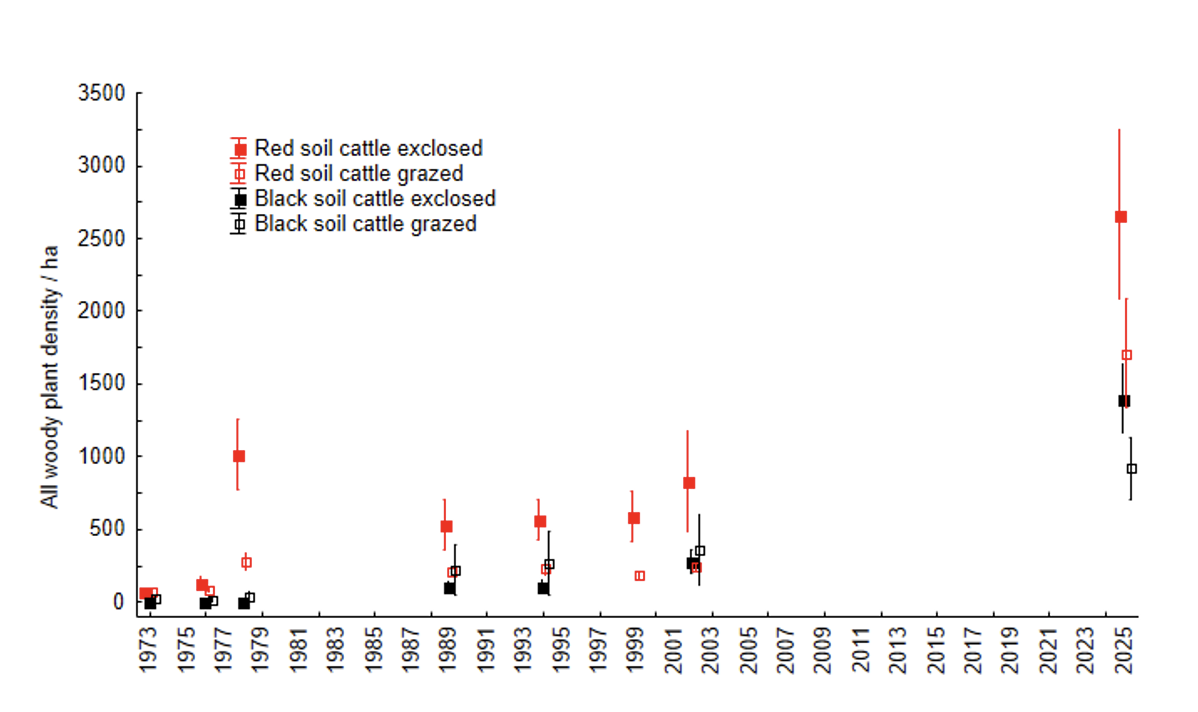
Figure 3: Total density of all mature and juvenile woody plants / ha through time inside and outside Kidman Springs long term exclosures. Mean ± standard error
Above average rainfall in recent decades has undoubtedly contributed to the current tree and shrub density measured inside and outside the exclosures this year (Fig. 4). During the first 20 years rainfall was below median in 60% of years and averaged 689mm, whereas over the last 35 years rainfall has been above median in 63% of the years and averaged 818mm. Exclosed sites now have more woody plants than grazed sites, but it wasn’t always this way.
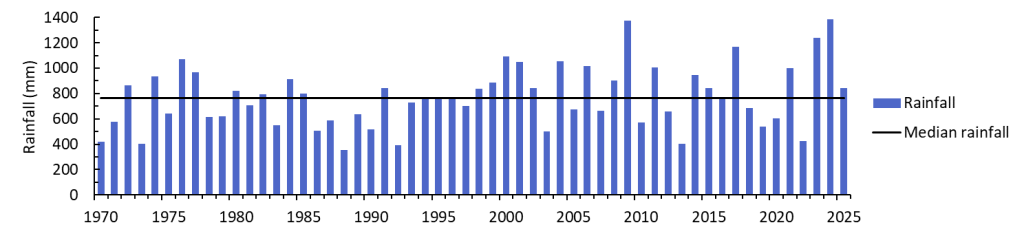
Figure 4: July to June annual and median rainfall 1970-2025 at Kidman Springs
Interestingly the total woody species richness (the number of different plant species) has increased over time across all treatments (Fig. 5). Grazing appears to have had little, if any, influence on this trend. In 1973, only two to five woody species were recorded per treatment and today that number has risen to between 10 to 21 species. The black soil ‘grassland’ has about half as many woody species as the red soil woodland.
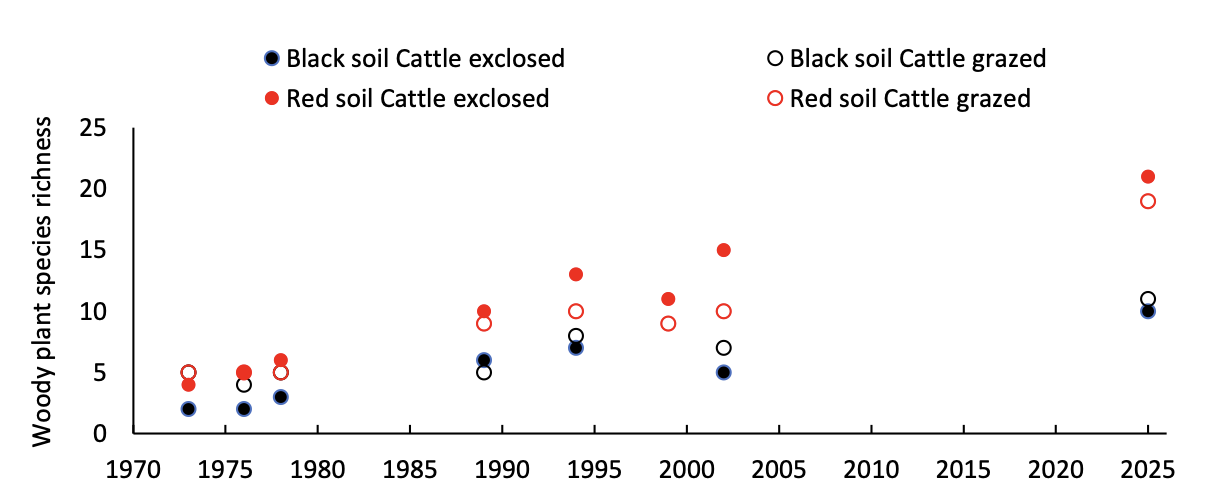
Figure 5: The number of woody plant species is still increasing at Kidman Springs after 50 years
Other factors potentially driving woody vegetation increases include the absence of regular fire and rising atmospheric carbon dioxide which have been implicated in increasing woody cover levels in savannas globally (e.g. Maschler et al. 2022). Analysis of the pasture layer is still underway.
Into the future
NT DAF aims to continue monitoring these sites to build valuable long-term datasets for understanding rangeland dynamics in the Northern Territory and provide context for interpreting findings from the Kidman Springs long-term fire experiment and other vegetation trends across the region.
Data from the first two decades gave little indication of the dramatic changes observed since, a reminder that the longer sites are measured, the more they reveal about the complex interactions between climate, grazing and vegetation dynamics. The latest data collection further demonstrates the value of systematic long-term vegetation studies, a theme that we contributed too at the recent International Rangelands Congress (Specht et al. 2025).
These sites are open to the broader research community and have supported studies examining the long-term effects of grazing and fire on above and below ground carbon storage and diversity, answering questions that were not anticipated at the beginning of the study.
A special thanks to Gary for generously sharing his time and deep knowledge of the sites. Travelling up from Alice at his own expense, he guided the team through the data collection and shared insights and stories from many previous years of sampling the sites. And, last word from Gary; he attests to global warming – he reckons the midday sun in June was hotter this year than it was 47 years ago, despite all the additional shade. Or maybe he’s just getting too old for the job? (Gary said this, not us!)
Further reading
Bastin, G, Ludwig, J, Eager, R, Liedloff, A, Andison, R and Cobiac, M (2003) Vegetation changes in a semi-arid tropical savanna, Northern Australia: 1973-2002. The Rangeland Journal, 25, 3–19.
Cowley, RA; Dyer, RM, Hearnden, MH (2025) Lessons from a 30 year burning experiment in northern Australian grazed tropical savannas. In Proceedings XII International Rangeland Congress. Editors: Sarah McDonald, Ron Hacker, Tony Pressland, Jennifer Silcock, Jodie Reseigh and Terry Beutel. 2-6 June 2025, Adelaide, South Australia. pp 845 – 850.
Foran, B, Bastin, G and Hill, B (1985) The pasture dynamics and management of two rangeland communities in the Victoria River District of the Northern Territory. Australian Rangeland Journal, 7(2), 107–113.
Maschler, J., Bialic‐Murphy, L., Wan, J., Andresen, L.C., Zohner, C.M., Reich, P.B., Lüscher, A., Schneider, M.K., Müller, C., and Moser, G. (2022) Links across ecological scales: Plant biomass responses to elevated CO2. Global Change Biology 28(21), 6115-6134.
Specht, A, Bastin, G, Carter, J, Cowley, R, Diete, R, Facelli, J, Maurer, G, O’Reagain, P and Thornton, C (2025) The value proposition for systematic long-term vegetation studies. In Proceedings XII International Rangeland Congress. Editors: Sarah McDonald, Ron Hacker, Tony Pressland, Jennifer Silcock, Jodie Reseigh and Terry Beutel. 2-6 June 2025, Adelaide, South Australia. pp 378 – 382.
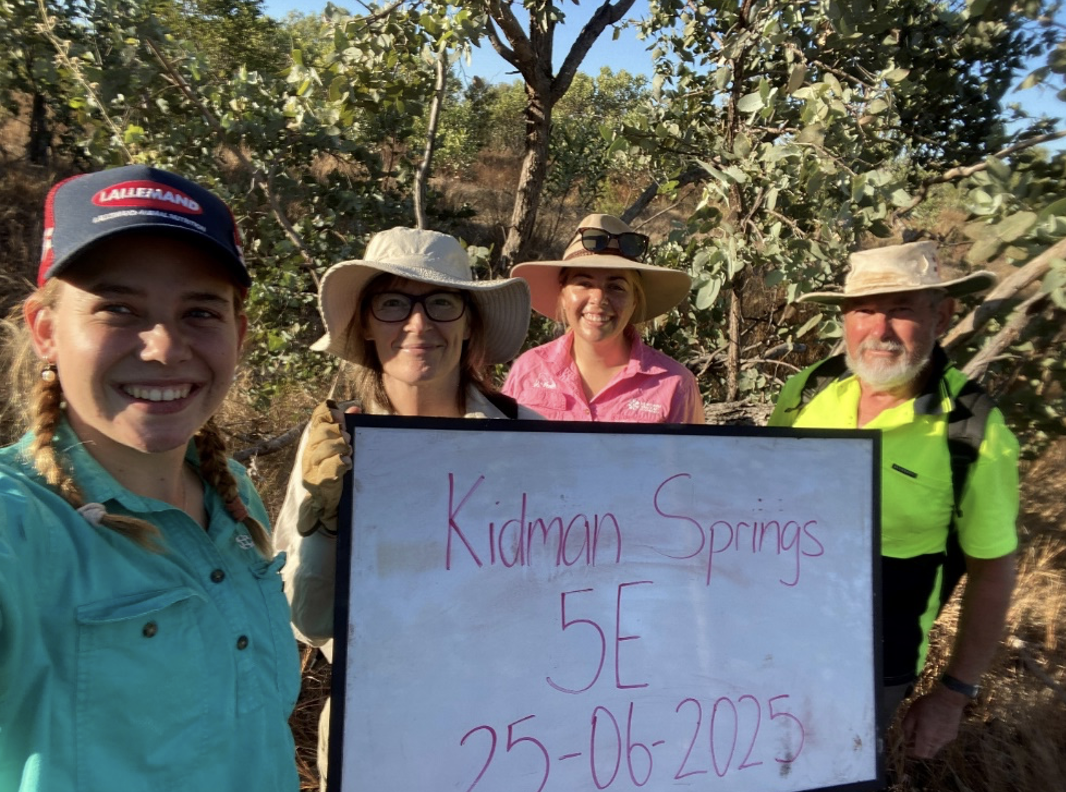
Figure 6: 2025 sampling of the Kidman Springs long term exclosures done and dusted. Left to right: Jaidyn Eastaughffe, Robyn Cowley, Kate Holzapfel, Gary Bastin.
Postscript
Just as well we sampled the sites this year because in early November all three long term exclosures burnt following dry storm lightning strikes with strong hot winds and high fuel loads. It will be interesting to follow how the woody plants bounce back.
2025(4)
- From the Council
- The ARS 2026 Conference Is Coming Soon
- The Latest from the International Year of Rangelands and Pastoralists 2026
- Revisiting 52-Year-Old Grazing Exclosures at Kidman Springs, NT
- The Xiith International Rangeland Congress, Adelaide, June 2025
- Book Review: A Bold Endeavour
- Ray Perry: The Father of Rangeland Science in Australia
- Hot Off the Press
- Position Available: Assistant Professor in Rangeland Ecology and Management
- Global Roundtable Talks About Sustainable Nutrition
- ARS Membership Update – December 2025
- From the Editor