Book Review: A Bold Endeavour
December 18, 2025Marg Friedel
What better place to launch a book than the Royal Freshwater Bay Yacht Club in Peppermint Grove, in the late afternoon of a sunny 25th November? Far from having an aquatic theme though, it was a book about the rangelands of Western Australian. More precisely, it was ‘A Bold Endeavour – a history of our work in the Western Australia Rangelands’.
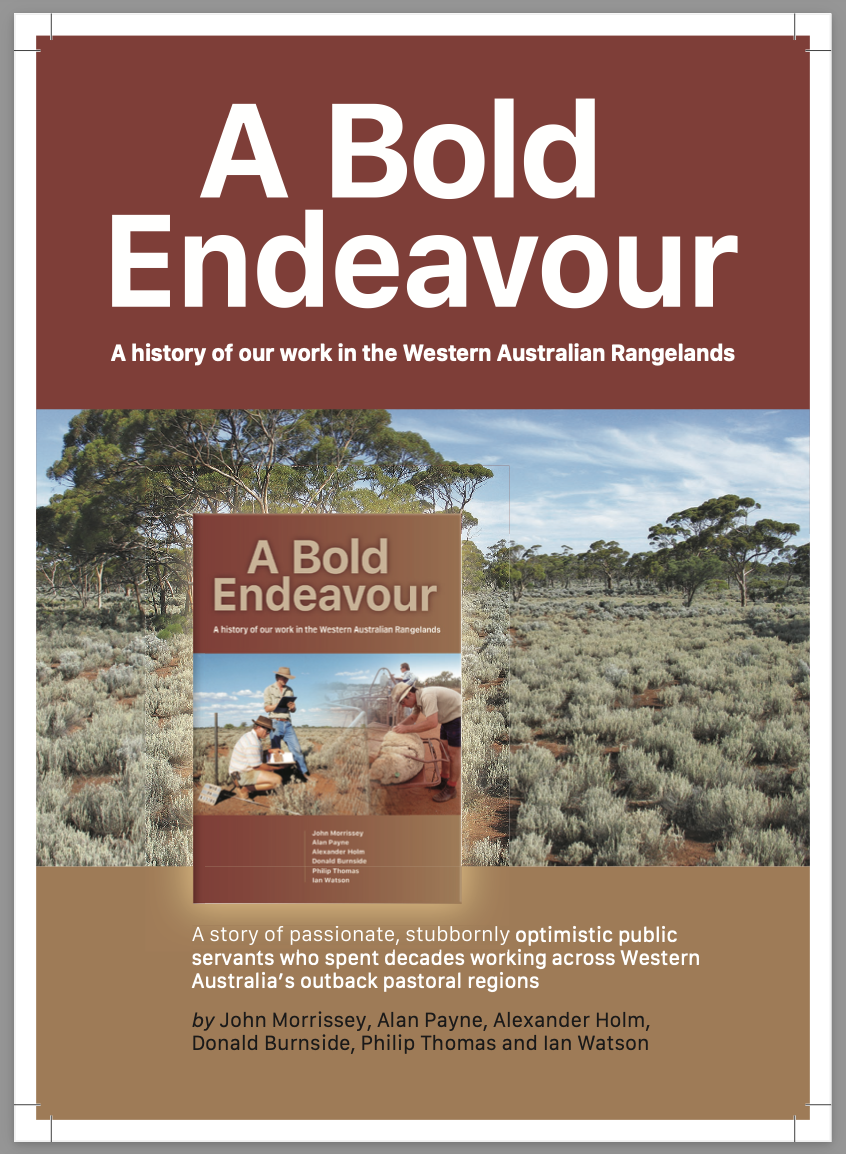
Over the last four years, authors John Morrissey, Alan Payne, Alec Holm, Don Burnside, Phil Thomas and Ian Watson had recalled, researched, debated (even argued) and written the story of the efforts by dedicated government officers to influence the management and use of the rangelands. As the authors explain, the first Department of Agriculture pioneers in the 1940s and 50s accepted a dual charter to improve animal production while ensuring the conservation of the soil and vegetation resources on which this production depended. This was a departure from the prevailing view that degradation was a natural consequence of progress and settlement, and that restoration was not a priority for landholders and administrators.
In developing the book, the authors decided that they would not just write a dry, stick-to-the-facts story but would include the human aspects of the Department’s endeavours over 50 years or more, talk about the many people involved, address the failures as well as the successes, and inject some humour into their story. Yes, there is even some poetry. Their goal was an easily readable book, accessible to non-technical family members as a target readership, and in that that they have succeeded very well.
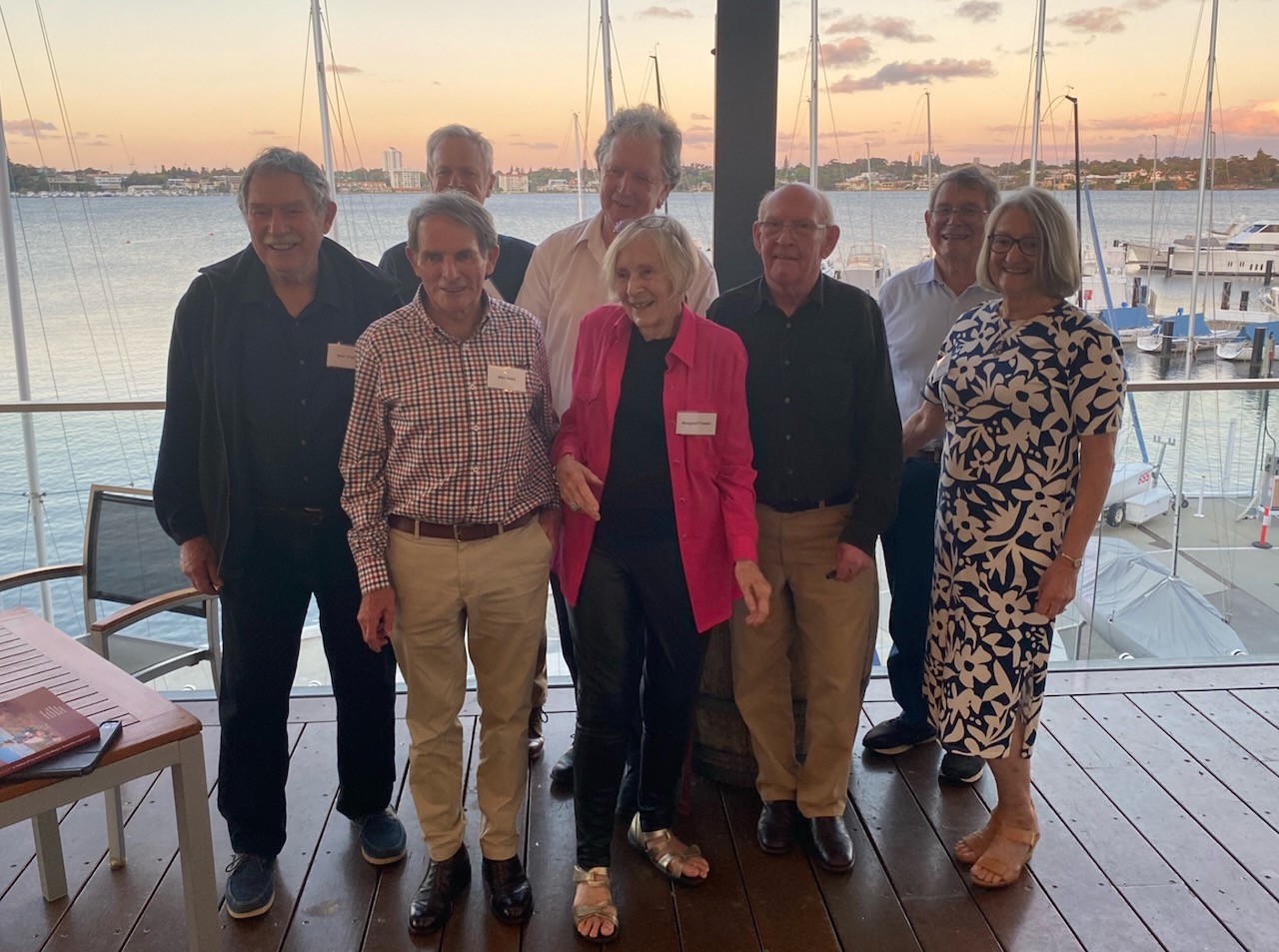
Photo 1: The authors and colleagues at the launch: Back row left to right Alan Payne, Ian Watson, Phil Thomas and Don Burnside; Front row left to right Alec Holm, Marg Friedel (MC), John Morrissey and Wendy Duncan (who launched the book). Note a strategic glimpse of the book at bottom left.
The first chapters introduce the rangelands themselves, explain what drove the Department to initiate rangeland work and establish the Range Management Branch (RMB), and celebrate the pioneer professional scientists Kevin Fitzgerald, Hank Suijdendorp and David Wilcox. Following chapters address rangeland resource inventory and condition survey, growing ecological understanding, monitoring – detecting change in rangelands, animal production, and landscape rehabilitation.
Later chapters address engagement with the pastoral industry, and the regulatory environment, and they are honest and thought provoking. In the authors’ own words regarding the first of these: ‘Further, although the extension activities were generally appreciated, it is sad to reflect that despite all this good work, apart from a relatively small number of cases, there is no compelling evidence that overall standards of management, or outcomes in terms of animal production and rangeland condition, have universally improved over our 50 years of activity’.
Regarding the second, what the authors say is telling: ‘In addressing land degradation in pastoral areas our approach was one of “encouragement and education” and to avoid use of compulsive powers available under the Soil and Land Conservation Act. We relied on the Pastoral Lands Board to act. The extreme action of lease forfeiture for land degradation under the Land Act 1997 was apparently taken only once in the history of the board, despite there being many clear cases of wanton degradation.’
They went on to say: ‘In 1991 the WA Legislative Assembly Select Committee into Land Conservation recognised rangeland degradation as a major environmental issue and “identified inadequate supervision and intervention by successive State Governments to halt the deteriorating condition of pastoral land resources” … In 2015 all pastoral leases came up for renewal when eligible pastoral leases were renewed for 50 years. Government resolved to waive or deem leases compliant with all existing land management and so ended a 30-year chapter of failed endeavour.’
Moreover, by the time the WA Rangeland Monitoring System (WARMS) was suspended in 2021, WARMS vegetation data and photographs had been collected from over 1600 sites across the 480 pastoral properties in WA rangelands from Kimberley to the Nullarbor, up to five times every five years in southern shrublands and nine full three-yearly assessments in grassland sites. This data set is arguably unparalleled anywhere else in Australia. There are no plans to make the data publicly available.
Despite the blunt conclusions, the book highlights just how much the RMB contributed to Australia’s understanding of rangelands from environmental, social and economic perspectives, and the truly heroic efforts of the early staff to meet their original charter. The commitment of staff throughout the existence of the branch to ‘making a difference’ is particularly impressive. They are described as individuals with perhaps an eccentric streak, something of a missionary zeal, and a love of the outback. I would add that they showed another essential characteristic – a sense of humour. There are some really enjoyable anecdotes scattered throughout the book, so you’ll need to buy it to find them.
Judging by the volume of chatter amongst the 100 or so attendees at the launch, there was also a great sense of camaraderie amongst not just the staff but also their colleagues in the pastoral industry and government. The chatter subsided long enough for Ian Watson to describe the process of creating the book, for Wendy Duncan (former WA MP, pastoralist and advocate for regional development) to launch the book and for Don Burnside to acknowledge other contributors and encourage book-buying, before the conversations resumed.
I commend ‘A Bold Endeavour’ to you!
How to order
Would you like your own personal copy of this wonderful book? Download the order form here.
2025(4)
- From the Council
- The ARS 2026 Conference Is Coming Soon
- The Latest from the International Year of Rangelands and Pastoralists 2026
- Revisiting 52-Year-Old Grazing Exclosures at Kidman Springs, NT
- The Xiith International Rangeland Congress, Adelaide, June 2025
- Book Review: A Bold Endeavour
- Ray Perry: The Father of Rangeland Science in Australia
- Hot Off the Press
- Position Available: Assistant Professor in Rangeland Ecology and Management
- Global Roundtable Talks About Sustainable Nutrition
- ARS Membership Update – December 2025
- From the Editor